Wednesday, June 10, 2015

Solar Deck Lights and Solar Post Lights

Solar lights and solar lights bridge post capitalization can significantly improve your deck, patio, stairs or ramp, and improve safety and security around your home. With good planning and good lighting, your deck can easily become a place of calm evening relaxation. With solar, you can turn your average spectacular terrace with a variety of lighting options.

Adding solar energy to its platform is a fast and easy way to increase the attractiveness and functionality of your outdoor space. Through effective solar technology, solar deck lights receive their energy from built-in batteries charged during the day by solar energy, with a built-in light sensor that automatically turn lights at dusk and dawn. Load and operating time varies depending on the season and location, so that increased exposure to sunlight produces and runtime at night.

Step solar lights for safety: A major factor in the design of lighting for your deck is security issues to protect your family and guests. Well lit staircases reduce the risk of slipping or falling. Adding solar lights stage housing for its actions is particularly important when there is any kind of light that illuminates the stairs to his night on the terrace. Solar lights are available in a variety of styles to combine their efforts, and email and sunlamps lanes to improve key areas around the stairs and steps.

Lights down to Ambience: soft lights strategically placed along the perimeter of the roof and the positions will create a warm and welcoming space. Solar deck lights are available in a variety of styles including low profile lights that provide down lighting to highlight your post or railing. This type of design will also create an environment conducive to intimate conversation and shows sophistication.

LED colors to celebrate: Adding colorful lighting to your deck will provide a call for the upcoming holiday. Solar deck lights are available in a variety of colors of LED. With distinctive designs and variety of lighting options on the market today, you can create a dazzling experience the floor of your deck to its highest peak.

Solar lighting Bridge is one of the fastest growing options for improving your outdoor space. There are a number of ways to integrate solar energy into its cover. Start by thinking about where light is needed for practical reasons. Whether you are adding lights to your deck for safety on stairs or installing lights to submit to add a little atmosphere, a wide range of energy efficient solutions they are available to illuminate your covered in style.

Beating Banner Blindness [PODCAST]

no evils all
Image by Billy Rowlinson via Flickr.

In this episode of the Call to Action podcast, we have a quick story about why we’ve restructured our AdWords account into country-specific campaigns. Then, we speak to Aaron Orendorff of iconiContent about everything display ads: banner blindness, the fat thumb phenomenon and how one company used display ads in their content to recruit qualified employees.

Listen to the podcast


Listen on iTunes.
Prefer Stitcher? We got your back.

Mentioned in the podcast

Read the transcript

In this episode: Dan Levy, Unbounce’s Content Strategist, interviews iconiContent’s founder, Aaron Orendorff.

Dan Levy: You start off your article with kind of a crazy statistic. It’s that you’re more likely to have twins than click on a banner ad. At the same time, you insist that display ads are not dead?

Aaron Orendorff: Exactly. So I get this number from Google DoubleClick data where they say, today, on average, in America, the click-through rate for a banner ad is just around 0.1 percent. So, a few years ago, Solve Media took that number and sort of crunched it in a really creative way and did a whole bunch of advertisements about, “You’re more likely to [fill in the blank] than ever click a display ad.” So they had things like the twins; you’re more likely to apply to Harvard and get accepted; win the mega-millions lottery; become a Navy SEAL; or my favorite: survive a plane crash.

Dan Levy: Wow.

Aaron Orendorff: But the reality is all recent numbers put the display ad networks at a combined total of roughly $3.5 billion worldwide, which is a staggering number, and it doesn’t necessarily mean that just because people are throwing money at it, it works. But, as I’m sure we’re gonna talk about a little bit later today, there are some incredible ways to actually up those click-through rates and really get a huge return on the investment.

Dan Levy: Right. So one of the reasons we hear people dismiss display ads is the idea that most web users these days are suffering from banner blindness. Is banner blindness a myth, or has it just been overstated?

Aaron Orendorff: It’s definitely not a myth. One of the best studies you can look at is by the Nielsen Norman Group, and it’s a very academic study. It’s a bit dated at this point, but if you just Google it, you can find it very easily. And they’ve got a ton of great visuals, some of which I included in the blog post that this was built on.

Recent data puts estimates roughly somewhere around 86 percent; that is, 86 percent of web users suffer from banner blindness. They’re looking at the either center column or the left column or the right column and ignoring anything that’s on the sidebar. That’s the easiest way to think about it.

So numbers like 86 percent, the heat maps from eye-tracking software reveal really clearly that it’s absolutely not a myth, and I don’t think it’s overstated.

Dan Levy: Great. Well, I wanna get into some of the ways that marketers could combat banner blindness. But, first, you say that one of the mistakes display advertisers make is that they only really pay attention to how many clicks their ads get. So what else are they missing there?

Aaron Orendorff: Yeah. This is a great one, and I don’t think this is a noob mistake at all. We all sort of fall for the, you know, as soon as I launch something, I wanna know exactly how it’s performing, and I’m chomping at the bit to look at the numbers as they pour in. And the easy stuff that we get access to is click-through rates and just conversions on the ads themselves.

A couple things that I mention in the article is it’s really important to set up a Google funnel using Google Goals, and they’ve got some great visualization tools that allow you to get a picture of not just who’s entering the landing page or entering your product page from a specific ad, but to find out which ads culminate in the most conversions at the end of the funnel, so all the way down to not only do they add it to cart, but they checked out, and they gave you money.

So, there, you’re able to see both the big picture of, okay, what ads are the source? Am I using Facebook and getting the most ultimate conversions? Am I using Google and getting it, or am I using my own site and getting it? But, also, what are the sticking points? Where’s the falling off? Where’s the friction coming in?

And I’ll give you one other great example of this. I was just down in California for International CRO Day, and Sean Work, who runs the blog over at KISSmetrics, talked about this exactly. And, for him, it was much more of a service-industry focus.

So he was talking a lot about not just getting those people to visit your website and actually buy from you, but then finding out what the sources are, where they’re coming from, of the people that actually stick around, really trying to reduce churn, so that you’re not fooled by those initial numbers into thinking just because it’s getting clicks, it’s actually bringing in revenue.

Dan Levy: Right. People get distracted by the click, but it ultimately comes down to the conversion.

Aaron Orendorff: Yeah, absolutely.

Dan Levy: You know, it’s become almost a cliché to hear about how selling to your existing customers can be a lot more profitable than trying to reach new ones. You suggest that there is an opportunity here for display advertisers. How so?

Aaron Orendorff: Yeah. The two real key words here − and they’re often used interchangeably − are retargeting and remarketing. And, sometimes, this can refer to using emails and retargeting. Google calls it remarketing. But, basically, what it boils down to is a culled ad, even if it’s generated by a search, has that dismal 0.1 percent click-through rate on something like Google Ad Display Network.

With retargeting and remarketing, what you’re doing is you’re taking the actual data from where your visitors went on your website. So, if they visited your stiletto section on your shoe store, then you can actually retarget them on other display network sites with those specific products.

So that’s sort of − I call it the micro yes customer, the person that hasn’t actually committed yet, but you’re still leaning on that principle, the weapon of persuasion that Robert Cialdini talks about, consistency and commitment, that people are much more likely, if they’ve taken a small step toward you, to take a larger step later on. And you’re just keeping that fresh in front of their minds.

The other way to do this is Google will actually allow you to tag the customers that ultimately check out, so they buy something from you. And then you can offer not just upsells, but, “If you’re interested in this, you might also be interested in that.” So you’re speaking directly to what someone’s already shown an interest in, whether just at the micro level − “I’m just browsing” − or especially at the, “I’ve purchased this, and now, as we all know, I’m much more likely to purchase again, especially in the short term.”

Dan Levy: Right. You also talk about a case study where customizing on-site display ads resulted in a 149 percent increase in click-throughs for the company Visual Website Optimizer. Can you unpack that one for us?

Aaron Orendorff: Oh, I love this one, yes. This is such a nugget, especially for anybody who’s trying to recruit folks and find the right people. So what Visual Website Optimizer wanted to do was hire new developers in India specifically. So they used behavioral tracking and geo-tracking to isolate where their visitors were coming from.

And they just did a really simple split test where half the visitors from India who went to their homepage got no display ad, and the other half got this − oh, it’s great − this tiny, little − if you can go to the blog and see it, it just says, “We’re hiring in Delhi,” with a smiley face after it, and not even a real smiley face, just an emoticon.

And it’s just that simple − I mean, it’s smaller than their headline. It’s smaller than their button. It doesn’t even necessarily look like a button. And yet, that drove that 149 percent increase to the company’s careers page. I mean, just that specificity of, “You’re here, and we’re talking directly to you,” pays off immensely.

Dan Levy: So is that one of the tricks for combatting banner blindness, you know, make your display ads not actually look like display ads, make them look more conversational, look like regular copy?

Aaron Orendorff: Yeah, almost like an instant message or something you would see on a Facebook, and especially because it’s got the specificity that’s, you know, it’s like when I hear my own name, my brain responds differently than when I hear other people’s names. It’s an instinctual response, or even just like − I always think of this as sort of like the, “Thank you, Delhi,” from a concert where everybody goes nuts, even though the band just said their city’s name, and they know they do this at every city, but they still love it.

Dan Levy: Right. They’re reading it off the set list on the floor because they’re −

Aaron Orendorff: Exactly, yeah.

Dan Levy: Right, yeah. It’s funny. You see that tactic done in a sleazy way a lot where display ads, but when you see something that looks like a flashing message from Facebook or something. But, in this case, they’re using that sort of tactic, but in a way that makes sense in the context of the site in that it’s targeted to users who actually find it relevant.

Aaron Orendorff: Yes, and one important word, both targeted and relevant, bringing those two together.

Dan Levy: Targeted and relevant − how do you make that into one word?

Aaron Orendorff: Oh, you want me to start mashing this up? Yeah.

Dan Levy: “Trelevant”? I don’t know.

Aaron Orendorff: “Trelevant”? I have no idea.

Dan Levy: So I’m sure everyone listening wants to get in on this awesome conversion action. What tools do you actually recommend for doing this type of onsite optimization?

Aaron Orendorff: You know, there’s a lot of great resources out there. And KISSmetrics has actually a phenomenal in-depth article on remarketing, retargeting in services specifically, and they give you sort of a pros and cons approach, things like that.

The ones that I’ve had the most exposure to basically fall into three types of categories. And all three of these are about doing exactly what Visual Website Optimizer did, using your own website, because someone’s already come to it, to then direct them to the place that not only fits where they’d like to go, but fits where you’d like them to go.

So some simple ones, first off, coupons, free shipping coupons, discount coupons, coupons specific to pages they’ve visited before with retargeting. A great resource for that is Fanplayr − that’s without an “E.”

And then the banner blindness thing comes up often. And, in fact, Infolinks.com actually registered the domain name BannerBlindness.org. So I’m not sure exactly how − I’m sure it’s not like a non-profit website, but the dot-org always makes me feel warm.

And they’ve got these variety of what they call in-fold, in-text, in-tag where you can have your banner at the bottom of the screen static, kind of like a Hello Bar, but at the bottom instead of the top.

You can actually tag keywords, so that they become hyperlinked to these advertisements, so if someone hovers over the keyword that they used to get to that page, it then sends them to the product itself or the next step in that process. So that’s for product ads.

And then the third one, this one actually I just discovered. I didn’t even include it in the article for Unbounce.

Dan Levy: All right, breaking news, I love it.

Aaron Orendorff: News, yeah. I might just be late to the game, but this is a service called Trendemon, with just one “D,” Trend E-M-O-N. And this is really great for content marketers, for bloggers that are selling a service or a subscription or a membership site. And it tries to actually replace the kind of for-further-reading stuff you often see at the bottom of blog posts. Usually, it’s just generated automatically by either what’s most recent or what’s most popular.

With Trendemon, they actually go in and identify what are the most lucrative paths, what articles connect with the next one that then gets somebody to that membership page? What are the highest converting articles on your site? And then it uses that as essentially a popup at the bottom. When somebody’s read the article and scrolled through, they’re most likely to then commit if they spent that sort of time on it. So those are the three that I’m most familiar with.

Dan Levy: All right. Well, I wanna ask you a little bit about that M-word that seems to be on everybody’s mind these days, mobile. First off, why is it so important to keep mobile in mind when setting up display ad campaigns?

Aaron Orendorff: Well, I mean, the big numbers, we’re all pretty familiar with. 2015 is the first year that we’re gonna see mobile internet viewing surpass desktop viewing, and not just by a little bit either. Estimates that I’ve seen put it at 34 mobile or Smartphone viewing hours to 27 desktop hours per month.

What’s interesting about that is when we look at the actual conversion rates by device type, what we find is a really significant sharp drop-off. So desktop, tablet, iPad, Kindle Fire kind of things usually hover somewhere between 8 and 9 percent conversion rate just across the board.

As soon as we half the screen size, we normally see about a half or even more drop in the actual conversion to around 4 or 5 percent. So there are some hurdles to overcome, not the least of which is the whole − have you heard of the fat-finger phenomenon?

Dan Levy: I have not only heard of it, but I think I suffer from it.

Aaron Orendorff: Okay. Well, everybody does. And this is what accounts for about 40 percent of mobile ads being accidental, based on sort of a bounce rate.

And so those create sort of those first big numbers. This is the need. This is where folks are going. This is where people are, especially starting the process. That’s really important to keep in mind. Whether it’s a service or a product, people start usually on a mobile device, and then they ultimately convert on a desktop.

Dan Levy: Right. I don’t wanna get too technical here, but there is some new jargon to learn when it comes to mobile, so can you tell me a little bit about what responsive ad units are?

Aaron Orendorff: As much as you don’t wanna get technical, neither do it, so I feel for you there.

Dan Levy: Cool.

Aaron Orendorff: The simple answer is responsive ad units are essentially the same as a responsive website. So they’re built behind the scenes to respond to the display size of the device that they’re on, so images get resized. Oftentimes, on a responsive website, you’ll see copy itself get reduced.

And the great thing is neither one of us have to be experts at this. Google already does this automatically. Facebook already does this automatically. And most of the other services that I’ve talked about, anybody who’s reputable is gonna give you that responsive just built right in.

Dan Levy: So what are the most important things to keep in mind when designing those responsive ads for mobile?

Aaron Orendorff: Oh, this is gonna sound so basic, which is great, right, because it’s those simple lessons that we have to return to over and over again, things like image cropping.

But with responsive ads, because you’re trying to anticipate a variety of screen sizes, some of the best practices are: Avoid using text in your images, unless that text is crazy large, unless you’ve tested it out, so that you know when it’s shrunk as an image, it still is eminently readable, just avoid it.

Product images: This is a great one. Product images are much more high-converting than abstract images. If you’re gonna go the sort of abstract-feeling way, there’s some traditional things like, yes, use smiling people, happy people − get a little REM on you − and then especially pay attention to line of sight. You want that − wherever the person’s looking, whether it’s directly at them, or if their line of sight is point towards the call to action, these are just small touches that make a big difference.

And then, with copy, you’re just focusing on exactly what the click is going to do, active language, language that uses the customer’s voice. “Let’s go,” “I’m in,” “Download now,” or my personal favorite, which is just the, “I want to −” fill in the blank, “I want to get access today,” “I want to start my membership today,” “I want to find out the Top 10 benefits of blank.”

Dan Levy: You know, it’s funny. I feel like so many of these tips are important for ad and landing page optimization in general. It’s just that, in mobile, the stakes are so much higher because people are so much more ready to bounce that it forces marketers to just focus on these things even more.

Aaron Orendorff: Yeah, that’s a great way to think about it. It’s sort of a condensed, boiled-down experience because people are mobile-snacking and not mobile-reading.

Dan Levy: Right, right. I need to ask you about this one. Can you explain what the actress Catherine Zeta-Jones taught the telecom company T-Mobile about mobile advertising?

Aaron Orendorff: Yeah. So this goes back to the whole, “Just show people the product. That’s what they wanna see.” So T-Mobile launched this campaign when they had a new phone come out a few years ago with Catherine Zeta-Jones as the representative of the entire campaign, and that’s who they featured in all their advertisements.

And I love this quote. This is from User Interface Engineering. They’re the people that were actually behind it. And they explained it just like this: “One older shopper interested in buying a phone with easy-to-press large buttons became frustrated when she couldn’t discern the button size in any of the pictures. When she spotted Catherine Zeta-Jones holding a phone she liked, she became exasperated. ‘She’s a very pretty woman,’ the shopper told us. ‘I just wish I could see the buttons.'”

Yeah, the need to actually show your product in action, or what are the features that are gonna highlight it? And that’s simplicity again.

Dan Levy: Yeah, show it in the context that the user is gonna be using it, so they could actually imagine themselves using it. They know how to use it.

Aaron Orendorff: Yeah, instead of Catherine Zeta-Jones using it.

Dan Levy: Right, yeah. Savvy marketers know already that they should be sending their campaign traffic not to their website, but ideally to a dedicated landing page. As we talked about, I’m sure most of the basic rules of landing page optimization still apply here. But is there anything in particular marketers should keep in mind when designing landing pages for display ads?

Aaron Orendorff: Sure. I like to break this down into the two S’s, send and story. And send will often be people talking about aligning the call to action on your display ad with whatever the headline is that you’re sending them to. So it’s very clear, one for one, but send goes beyond just simply the copy itself into things like obviously design, image and color scheme. So there’s a very clear continuity. It’s not a surprise to the person when they click it. There’s no adjustment period.

And the same thing goes for the idea of story. I really love talking to clients about trying to think of their sales funnel as a story that unfolds. The job of the banner ad, the job of the display ad, of the Google AdWord is just to get the click, to entice, to compel an action. And often, you can use things like cliffhangers or the “I want” or a question to drive somebody to the next stage. And then you’re immediately answering it and propelling them onto the next part, the conversion point.

And thinking about it like a story where they’re actually going through a process − there’s kind of this narrative art; there’s a character; they’re the main character of it − really helps you think in those continuity terms a little bit stronger than simply saying, “send” and make it feel the same to us.

Dan Levy: Yeah, that’s interesting, yeah, using the framework of story to make sure that every element on your page leads you to the next, just the way that a paragraph would in a story.

Aaron Orendorff: Oh, yeah, and having a consistent emotion. I mean, okay, so this is obviously − this applies to any sort of campaign, any sort of funnel. The same stuff, image and color absolutely applies to mobile and smaller and display ads.

But the story, having a continuous feel, okay, if you’re gonna go after somebody’s fear, then don’t shift emotions on them from a scary ad to a comforting landing page, right? If you’re going after someone’s excitement, or you’re enticing them, or if it’s driven by lust, then run with it. That’s the emotion that should be amplified every step.

Dan Levy: Yeah, that’s like a movie or a TV show where you can’t quite figure out if it’s a comedy or if it’s a drama, right? It kind of baits and switches on you, and that’s not a great way to drive people towards that conversion.

Aaron Orendorff: Oh, yeah, to communicate in general.

Dan Levy: Yeah, exactly, yeah, communicate in general. I guess a lot of these rules are just − they flow from general communication best practices and ways that you should conduct yourself as a human being talking to other human beings.

Aaron Orendorff: Oh, what a beautiful way, yeah, as a human being talking to other human beings.

Dan Levy: Yeah, that’s what online marketing is ultimately about, right?

Aaron Orendorff: Yeah, oh, the conversational element and the building a relationship element, absolutely.

Dan Levy: So I have a feeling you might have converted some display ad skeptic or banner blindness phobics at this point. So what’s the best way for marketers who want to start experimenting more with display ads to get started?

Aaron Orendorff: Getting started, two ways: The simplest and easiest is Facebook. Facebook is gonna be your lowest-entry cost, the most fun to play around with, and really a simple user interface, as well. They’re really easy to create. And it’s so ubiquitous now.

Now, this is gonna depend a little bit on your industry. I mean, things like the average Facebook click-through rate varies quite a bit, and I’ve sort of got some bad news coming. But the lowest-performing, or close to the lowest-performing industry, is advertising in consulting. That’s right about a 0.07 percent. The only thing that performs worse on Facebook − and I found this so hard to believe − is dating sites.

Dan Levy: Oh, wow, interesting.

Aaron Orendorff: Yeah, shock. But things like telecommunication, publishing, and then also just anything entertainment-related has about a 2 to 3 to, in some cases, almost a 10 times improvement on that. So it’s a great place to get started.

Dan Levy: Right. That’s actually kind of good news for content marketers, as well, right, because publishing, entertainment, that’s where you could kind of nudge yourself over to that category.

Aaron Orendorff: Oh, yeah, to try to create content that’s in these streams that already exist of why people are there.

Dan Levy: Totally, yeah, but I digress. Sorry for cutting you off there.

Aaron Orendorff: Oh, no, not at all. Yeah, and the cost is low. That’s the really great thing. AdWords is, as we all know, incredibly competitive, even just on an all things being equal, we’re looking at about a $2.50 cost-per-click rate, whereas, Facebook comes in at 80 cents cost-per-click, and you can do that by volume and just impression rates, things like that, which comes out to be about 25 cents per 1,000. So it’s a very inexpensive way to get into it.

What I would say is, if you’ve experimented with AdWords before, or if you’re used to using full-body copy, the absolute best place for you to go − and I can’t say enough good things about this dude − is Perry Marshall’s Ultimate Guide to Facebook Advertising. It is the simplest introduction. And, in fact, Perry Marshall’s got a great podcast, as well, that the amazing folks over at I Love Marketing did where they kind of crash-course you through the difference between AdWords and Facebook advertising.

Dan Levy: That’s best for people who have already used AdWords and are trying to make the transition to Facebook advertising.

Aaron Orendorff: Exactly, or folks that are just used to traditional − I’ve built some landing pages before, I’ve done long-form copy, I’ve written product descriptions, and now, I have a couple of lines to get a point across.

And then the other really great one is your own site. Simple things like what Visual Website Optimizer did, they did with their own service, and they’re an incredibly inexpensive service. Same thing with what you awesome people offer is to A/B test things like geo-targeting, like where the source is coming from, and just start adding those kind of non-button buttons, the, “Come work for us here,” those kind of elements to your own site.

The only trick with that is you’ve got to be sort of a certain level of player obviously to run tests or to see the kind of improvement, but with enough traffic to actually get that, which is why again, go back to Facebook because you’re gonna get the exposure that you need, and you can get immediate feedback.

Dan Levy: Yeah, that’s great advice, using Facebook as your testing ground for testing, testing ground for testing.

Aaron Orendorff: There it is.

Dan Levy: Yeah. I was, like, does that make sense? And, yeah, that’s exactly what I was trying to say.

Aaron Orendorff: That is exactly it, like a human.

Dan Levy: Like a human. That’s great advice. It was so good talking to you, Aaron, appreciate it.

Aaron Orendorff: Oh, thank you. It was really great being here. I look forward to doing more of this kind of stuff with you guys.

Transcript by GMR Transcription


Monday, June 8, 2015

A Fool with a Tool is Still a Fool: Why Marketing Automation Isn’t Enough

marketing-automation-650
Image by Chris Isherwood via Flickr.

Good marketing is all about sending the right message to the right people at the right time.

Properly segmenting your contacts using the right variables allows you to better target everything from emails to PPC campaigns to landing pages. The more targeted your messaging, the more likely you are to see a lift in conversion across the board.

This is why many people choose to adopt a marketing automation platform: software that addresses the management and automation of your contact database, customer nurturing, email marketing and other workflows.

In addition to contact management, most MAPs also have a broad range of other features, including lead scoring, content management, SEO management, tracking and reporting.

This smorgasbord of features leads us to one of the most common marketing automation misconceptions: people think that marketing automation is the only tool you’ll ever need.

But the reality is:

A fool with a tool is still a fool.

This quote by Grady Booch aptly describes the risk of implementing a marketing automation platform without truly understanding its strengths and limitations.

There is no silver bullet.

Marketing automation will not solve all of your problems, nor will it be the only tool you’ll need in your marketing stack. While your MAP might have the ability to do all of the above – it doesn’t mean it’s the best tool for the job.

In fact, in some cases, using a more specialized tool is a better way to go – it’s part of the reason why major marketing automation providers (like HubSpot, Marketo, Eloqua and Pardot) have thriving partner networks with a ton of integration partners.

Not sure if your marketing automation tool is giving you the flexibility you need? Here are some examples where using specialized software can help you refine your execution and drive better results.

Landing pages

Some marketing automation platforms provide the ability to set up basic landing pages, but the range of features available to create, test and optimize them are limited.

At Uberflip we’ve found a handful of limitations with our MAP’s landing page builder.

To get the level of customization we wanted in our landing pages, we would have had to spend more time and resources fiddling with CSS and HTML. Even then, we’re limited by how the end result will look. We’re also limited by the fact that we can only create one variant on a landing page and the traffic split is randomized by our MAP, giving us very little control.

As I speak to more and more marketers, it’s clear that this is a common pain point when it comes to landing pages. Nick Bhutani, Sr. Digital & Acquisition Marketing Manager at booker.com has the same problem. According to Nick, they needed:

A better solution because the out of the box landing page feature provided by our marketing automation platform just wasn’t as flexible in terms of design and development. Our design team was looking for mobile/responsive style landing pages, and found this tool a lot easier to work. This had a very positive effect on our mobile/tablet conversions.

At the end of the day, using Unbounce helped booker.com decrease their CPA by 42% and they saw a 33% lift in conversion rates.

landing-page-650
Using a dedicated landing page builder helped booker.com decrease their CPA by 42% and they saw a 33% lift in conversion rates.

Similarly, at Uberflip, we’ve found that using a specialized landing page builder like Unbounce has a number of benefits, especially when we’re testing landing pages for promotions or other campaigns:

  • We have better access to more high-quality templates
  • We can ensure that our landing pages are mobile-friendly (surprisingly, this isn’t possible with many MAPs)
  • We can easily manipulate the design to match our brand guidelines
  • We can create more than one variant and we have great control over how the traffic is split between landing page variants.

Bottom line: the level of customization and depth of feature set are key to driving results when it comes to landing page optimization.

Lead scoring

Lead scoring is a great way to prioritize leads for your sales team. Here’s how it works in most marketing automation tools:

  1. Identify characteristics and behaviour of the people who you think are likely to convert into customers.
  2. Create a formula based on these parameters, assigning different weights to each variable depending on the assumed impact.
  3. Send what you assume to be qualified leads (i.e. they hit a certain score) to your sales team.
  4. See if your sales team loves or hates you (i.e. were your assumptions correct?)
  5. Rinse and repeat.

The challenge is that these are only variables that you think have an impact based on a limited data set.

In reality, there are countless signals that can tell you whether or not someone is likely to become a customer. And many of these signals are seemingly unrelated to your product and are outside the scope of the data your MAP provides.

Using a tool like Infer or Lattice-Engines, you can automate a more sophisticated lead scoring process.

These tools supplement your existing data with thousands of external signals that their algorithms can find by scouring the internet. That could mean anything from employee count and technology vendors to social presence.

You’d be surprised at what kind of information you aren’t even aware of may be indicative of a potential buyer’s behavior.

Lattice-Engine-Lead-Score
Specialized lead scoring tools like Lattice-Engines can help you score leads in a more sophisticated way – and rake in more conversions.

For example, marketing technology company Demandbase uses a predictive analytics platform to identify the shared characteristics (based on internal data and external signals) of “high-value” leads and prioritize them. By making sure their sales and marketing teams were focused on the higher scoring leads, they were able to significantly increase their pipeline and saw a 75% increase in close rate.

Through analyzing your existing data and finding all of the external signals that have an impact on your lead score, you can validate your assumptions, improve accuracy and learn more about your customers.

Bonus: A more accurate lead score means you’ll be feeding better leads to your sales team — and they’ll love you for it.

Content management

Great content fuels marketing campaigns.

But creating great content isn’t enough to generate leads. You need to be able to create a great content experience, which includes everything from killer design, great structure, the ability to manage premium content like ebooks and videos and effective calls to action.

When it comes to managing the user experience for your blog or resource center, the CMS capabilities in a MAP are often limited. It’s also worth noting that, while a few marketing automation providers have CMS capabilities, many do not, so there is often a disconnect between content assets and marketing automation processes.

Taulia, a payments solutions provider based in San Francisco, was using the CMS provided in their marketing automation platform. But as content became a more important part of the marketing efforts, it was clear they needed more flexibility in creating and updating the entire content experience – not just the content itself.

By using Uberflip, a CMS designed for content marketers, they didn’t need to rely on IT to easily:

  • Organize all their content (including blog articles, videos, ebooks and white papers)
  • Create tailored content streams for specific personas
  • Place and customize calls to action
  • Include nested forms and overlays within the user experience
taulia-resource-hub-560
Taulia, a payments solutions provider based in San Francisco, uses a specialized CMS to provide a delightful content experience for their audience.

Using a specialized content marketing platform that integrates with their MAP helped Taulia tailor the user experience and manage the content from their marketing campaigns easily. This means they can move faster, target content better and at the end of the day, generate more leads.

Adapting your marketing ecosystem

Understanding the purpose, strengths and limitations of your marketing automation platform is key to driving killer results. While your MAP might be the core of your marketing ecosystem, you also have to identify the right complementary tools based on your goals and needs.

When it comes to certain functions, they simply don’t provide the same depth of features that you might need.

But regardless of the tools you use, without the right people and processes in place to execute, you’re going to be wasting your time and money.

So take Booch’s quote to heart and avoid becoming a fool with tool. Understand how your company and your team operates and build a stack that will improve your processes and get results.

Are there any other challenges you’ve experienced with marketing automation? How did you overcome them?

How to Get Users to Embrace Your Offer (Without Resorting to Shady Marketing Techniques)

We’ve all seen them. Those questionable sites that throw a smattering of popups and lightboxes and offers at us in an attempt to reel us back in. We simply can’t go unless we get their free e-book, sign up for their newsletter, or we’re otherwise happy with the situation that caused us to click them in the first place.

junk

Because nothing says “Make Money Online!” like disembodied happy people!

But why resort to these kinds of last-ditch effort techniques at all? Most usability experts would have you roll out the red carpet to your prospects and pepper them with deals and discounts, but I’d like to propose a different idea – getting them so accustomed, familiar and eager to do business with you gradually – until it seems so easy and convenient, they’ll wonder why they didn’t think of it in the first place.

This process is known as User Onboarding, a term coined by designer Samuel Hulick. The story goes that Samuel was considering using online accounting service LessAccounting, but he struggled during the sign up process – so much so, that he wrote a review about it on his site. It was useful and informative, but didn’t back away from necessary criticisms either. Word spread to LessAccounting’s co-founder, who (much to Samuel’s surprise) was thrilled with the review and started making the necessary changes on the site right away.

The original video “tear down” review of LessAccounting

So how can you leverage the user onboarding process for your own site and get prospects to go from casual browser to engaged buyer? And how does this differ from other techniques like remarketing? Let’s take a closer look at some techniques you can put to use right away.

The Key Difference Between User Onboarding and Remarketing/Retargeting

Both remarketing and user onboarding have a lot of similarities. They’re both encouraging users to take the next step toward a conversion. However, the user onboarding process involves much gentler guidance, whereas remarketing is more of a nudge – it could be welcomed, as in “oh! I forgot I had that in my cart!” or a mild annoyance, as in “I abandoned my cart because the price was too high – leave me alone!”

So how do you walk the line between (un)welcome reminder and gentle guidance?

Let the User Make Purposeful Progress

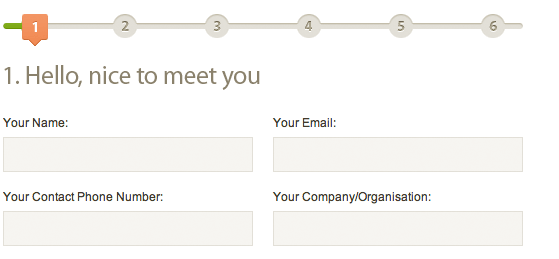
If you have a considerable number of steps in your sign up or registration process, using progress indicators can help. Progress indicators are non-intrusive, and give users a meaningful goal to reach. Many apps, services and memberships leverage progress bars to give users a clear indication of where they are in the process, how many steps are remaining and how to continue.

progress-stepsProgress steps give the user a clear indication of what’s next – and a goal to move toward

Show Them What They Get (Instead of What They Don’t Get)

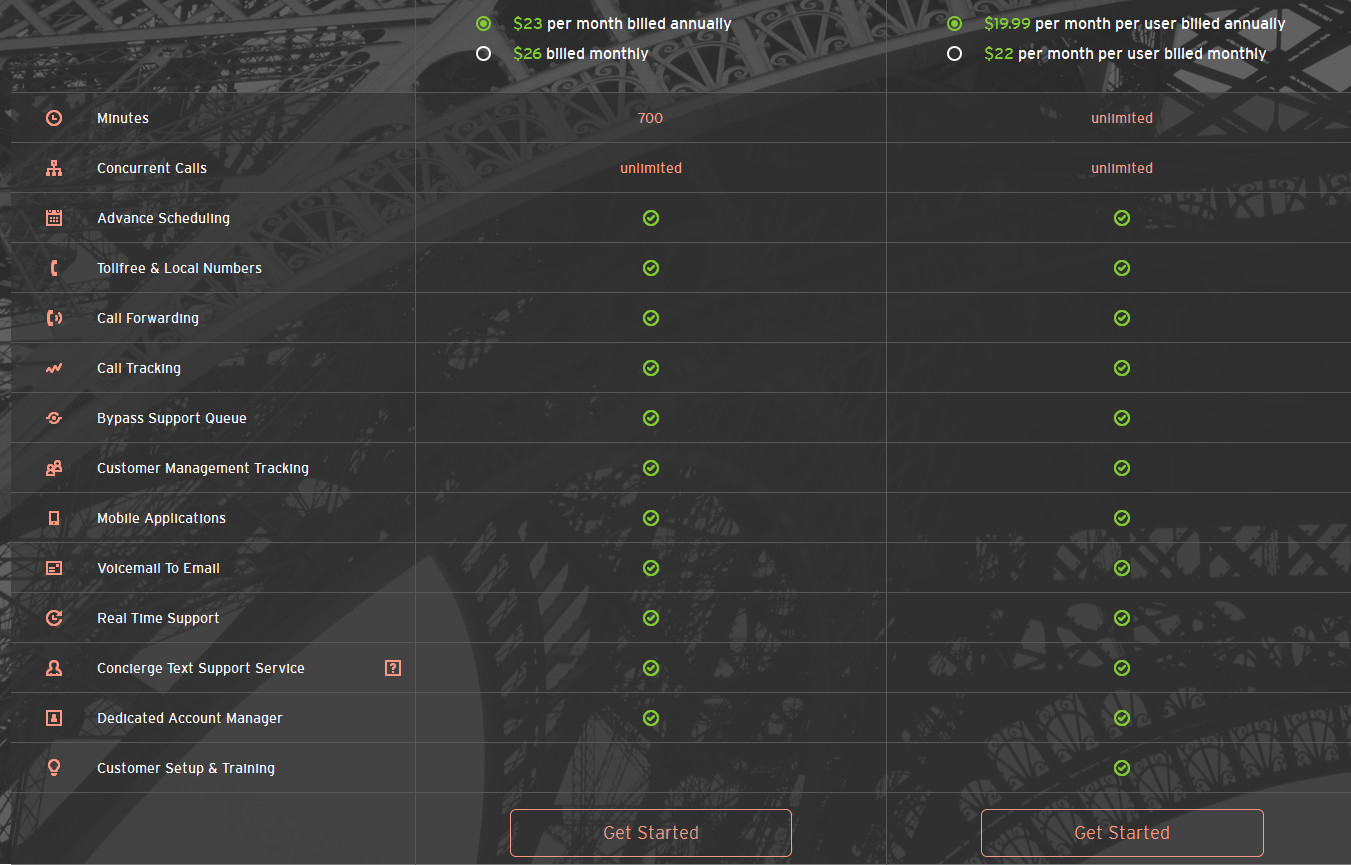
Many sites use feature comparison charts as a way to show users the differences between packages and pricing. Oftentimes you’ll have a scattering of green checkmarks and red X’s to show what’s included. But what if you only concentrated on the positive by showing users what they get, as opposed to what they don’t get?

Vonjour, a phone and text messaging service, does this with their plans. This not only alleviates the pain points of “look how restrictive this package is” but gets users excited from a value standpoint with “look at all the things that are included!”

vonjour

Just look at all the features you get!

Be Careful With Settings and Controls

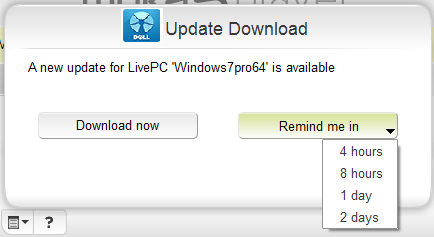
If you want to improve the user experience with your app, system or software, be careful about giving the user too much control, too soon. While it’s possible that most users will want to dive right in and play around, oftentimes, cumbersome tooltips, popups and other instances will clamor for their attention instantly. It can be almost instinctive to click the “do not remind me again” box and then forget where to go to pick back up the process later.

Dell’s LivePC does a good job of reminding the user without being too insistent or interruptive, by giving them several options to choose from for a reminder.

livepc

Live PC lets you pick a reminder time that’s convenient for you

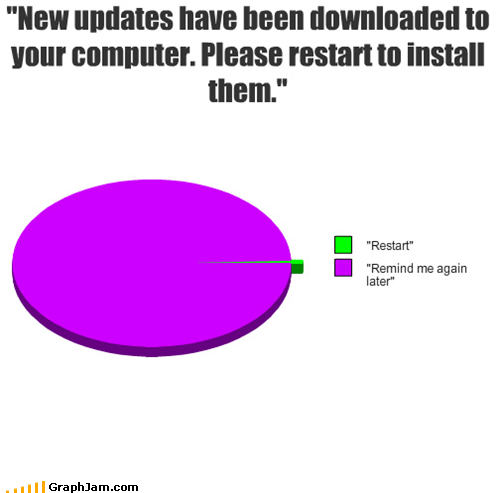
Microsoft, however, failed to get the memo:

dont-remind-me

Still waiting for that “Don’t Remind Me Again” button…

View the Process from the User’s Perspective

What happens after the user clicks your call to action? For many sites, users are directed to the next step or feature that the service assumes is the best choice for them. It can seem like a no-brainer to propel the user toward embracing certain features – after all, those are the very things that set your service, app or product apart.

However, remember that from the user’s point of view, all of these questions and features can seem confusing or unnecessary. From their perspective, asking them to “tell us your email address (so that we can customize your experience)” or “Give [service] permission to access your email contacts” are more uncomfortable and intrusive than helpful. “Customize your user experience” – what does that even mean? How will you customize it? How will you help me to do the very thing that caused me to sign up with you in the first place?

If you can’t answer that question – users will simply give up and turn their account into a ghost town.

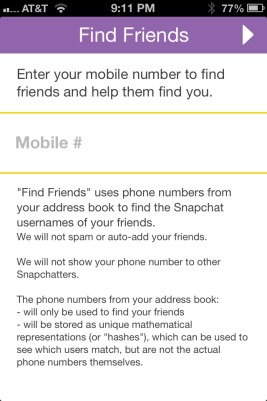
Look at how SnapChat handles this request in a more human way – “Do this, so that we can help you do that” – Enter your phone number so that we can help your friends find you (and vice versa)

snapchat

In addition, the less barriers to entry you can throw up in the user adoption process, the higher your conversion rate can be. Our own KISSmetrics login system uses Google to circumvent the creation of yet-another-username-and-password which can be distracting and herd the user away from the original goal. As a result of using this social login system, our conversion rate ranged from 44-82%.

km quantify

KISSmetrics achieved an 82% improvement in user onboarding by using a social login system

The Final Thought on User Onboarding

As a general rule, the more human, open and friendly you can make the process – whether it’s a demo, a login or a tool, the more people will be willing to take the next steps. Remember, people are more likely to do things that are in their best interest and benefit immediately, rather than waiting and hoping they have the opportunity to go back at a later date. Once you have their attention, treat it like the precious commodity it is and work with them to turn them from casual users into brand evangelists!

Have you spotted a great example of user onboarding? Tell us about it in the comments below!

About the Author: Sherice Jacob helps business owners improve website design and increase conversion rates through compelling copywriting, user-friendly design and smart analytics analysis. Learn more at iElectrify.com and download your free web copy tune-up and conversion checklist today!

Sunday, June 7, 2015

west palm beach social media management

west palm beach social media management
seo west palm beach

Optimize Reach is a refreshingly different SEO company located in West Palm Beach Florida. We specialize in digital marketing that utilizes advanced marketing tactics designed to produce maximum return on investment (ROI).

Our pay per lead campaigns are guaranteed to send you qualified leads through direct phone calls or emails/website submissions or you will not be charged for the leads.

No risk: Each new lead is tracked with advanced analytic software, if you receive a wrong number or the lead turns out to be a sales call then you will NOT be charged for the call. Its’ that simple.

No contracts: We don’t believe in contracts, we believe in earning your business and eventually your trust. If at any time you feel you are not receiving the level of service or quality leads that you expected you can simply let us know and cancel at any time.

When you’ve been producing results with triple digit ROI like we have we don’t worry about our customers leaving. We focus on driving their ROI even higher. At the end of the day we grow when you grow. Our business, is growing yours.

Every marketing campaign is deployed with advanced analytic tracking. Every click and every call is thoroughly reported. This allows us to know exactly what marketing campaigns worked and what didn't work, allowing us to tweak what isn't working and maximize our marketing budget.

This ensures that every advertising dollar is recorded and measured. This allows us to optimize and maximize our efforts on traffic platforms that are working, and reduce our efforts on campaigns that are producing a low ROI, allowing us to reallocate those funds to what is working.

Our west Palm Beach SEO and online marketing techniques begin by analyzing your current website from the marketing perspective to find answers to questions like: How many visitors come to your site? What is the real goal of your website? What sources and devices do they come from? This will allow us to optimize your website to fulfill its real purpose.

Second, search engine optimization will definitely follow. So we will take a look at what keywords are tied to your business. What links point to your site? And most importantly what can we do with your actual website content?

This type of SEO should get you better positions on search engines results page (Google, Bing, Yahoo). Pay Per Click campaigns are another way we can help boost your business. These Paid online campaigns can help you get more attention in search results, even on competitive keywords. PPC can be easily measured, and are also flexible; we can start them today, and if you want, stop them tomorrow.

Another great way to make you more visible to the outer world is to start being active on social media. We will choose only the networks suitable for your business, develop a custom strategy to meet your fans, and monitor and maintain a good reputation of your company.

Finally, we can also consider other marketing channels and techniques, like email marketing, mobile marketing campaigns, or traditional offline channels like direct mail.

Still have questions to ask? Or you want to know how our strategies can help your specific business requirements? Just contact us, we help companies and individuals just like you, every day.

Other searches that helped you find this video:
Digital Marketing-Internet Marketing-Social Media Marketing-Pay Per Click campaign management

Follow us on Twitter: https://twitter.com/OptimizeReach
More information about Digital Marketing visit: http://en.wikipedia.org/wiki/Digital_marketing

Thursday, June 4, 2015

Improving Your Facebook Reach (Infographic)

If BuzzFeed has taught us anything, it’s that Google is no longer necessary if we want to acquire a lot of traffic. Hundreds of articles and quizzes created by BuzzFeed have gone viral, which has sent millions of Facebook and Twitter users their way. In an age when everyone is concerned with SEO, seeing a site like BuzzFeed succeed without Google is refreshing. It also serves as inspiration for what you can do to drive more traffic from social.

But the competition is stiff. Your average Facebook user has hundreds of friends and follows hundreds of pages. Many of them are posting Facebook updates every day. And Facebook doesn’t show users everything posted in the News Feed, only the content that is relevant to them and that has a high CTR (along with other factors). This makes it very difficult to get near the top of the News Feed. It requires some strategy and a little bit of luck. But if you become “News Feed Friendly,” you’ll start getting more traffic from Facebook and diversify your traffic sources.

Today’s infographic offers some advice on improving your Facebook organic reach.

How to Improve Your Facebook’s Organic Reach
Courtesy of: Quick Sprout

About the Author: Zach Bulygo (Twitter) is a Content Writer for KISSmetrics.

How to Turn Your Social Media Marketing From Cost Center to Profit Center

How do you demonstrate social media ROI to your key stakeholders?

In 2015, over $24 billion will be spent on social media advertising. Now, more than ever, brands are creating digital content and campaigns for their online communities. With this large investment, the social landscape has become noisy and brands and publishers are fighting for virality.

With over 2 million blog posts published daily, Google CEO Eric Schmidt so famously noted that “more content is being created in 48 hours than what was produced from the beginning of time until 2003.”

Social content and the role of the Social Media Manager has transformed tremendously in the last five years. Engagement used to be king. Success was measured through amount of likes and shares. This is no longer the case.

Your social strategy needs to extend from just building brand loyalty and awareness to customer acquisition and retention. It’s imperative to create a strategy that proves the power of social media as a revenue channel.

Invest in the right content

To successfully transform your social media community from a cost center to a profit center, you need to understand which content is most effective.

Fortunately, the large array of analytics available can give highly actionable insights and results, so you can create a data-driven social strategy to justify your seat at the table.

Social media tools and tracking codes can help to gather insights about your content and audience. A few examples include:

  • Sprinklr, Hootsuite, Tweetdeck
    • These social CRM tools make it easy to to schedule, draft, post, and analyze all social content
  • Facebook and Twitter Platform Insights
    • Take advantage of the built-in analytics published by the platforms themselves.
  • KISSmetrics

ReportingDashboard

Photo: Analytics Dashboards Provide In-Depth Insights

These tools and metrics can truly define your strategy. You can learn:

  • Best times to post
  • What your community is saying
  • Who your brand advocates are
  • What links are being clicked on
  • App download rates
  • Number of social shares

Use these insights to optimize your content calendar with appropriate brand messaging and creatives. The more targeted your posts, the higher the engagement and conversion rates will be.

Invest behind the right content & platforms

Now that you have your content calendar down, make sure you are posting to the correct social channels. Each day there is a new social media platform launching: Periscope, Meerkat, Ello launched within the last several months and already changed how brands can communicate with their customers. Make sure you are using your time and resources correctly and focus on channels where your customers are. For example, if you have a predominantly male audience, it doesn’t make sense to invest heavily on Pinterest – which has a 68% female audience.

Clearly define your KPIs and if they fit for each platform. For direct-response campaigns, Facebook and Twitter are well suited for signups or e-commerce conversions.

If Facebook or Twitter have proven to be strong content channels, consider pushing ad budgets using the targeting tools provided.

For Facebook:

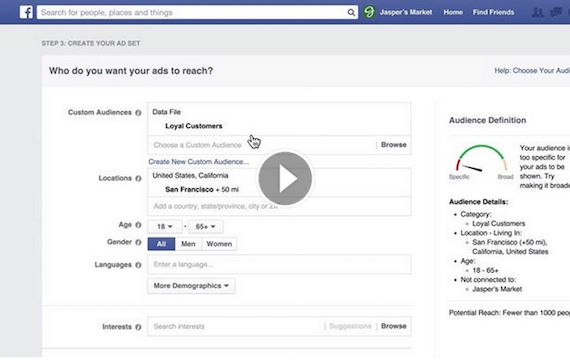
  • Custom or “Look-a-like” Audiences
    • Target the right audience demographics who will turn into high-converting users
    • Upload a list of email addresses from your customers to find similar audiences
  • Dark Posts
    • News Feed style ads that don’t publish to your timeline or in your fans’ newsfeeds. These are helpful for spreading the word without spamming your fans.

Custom-Audiences

Photo: Custom or “Look-a-like” Audiences

For Twitter:

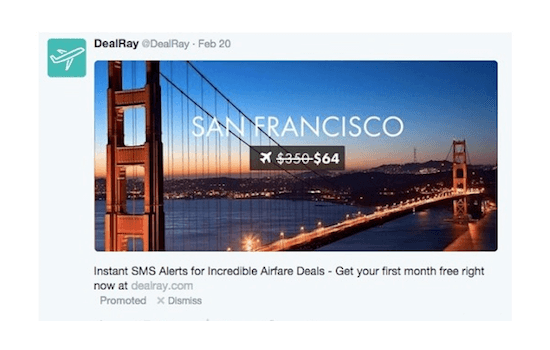
  • Promoted Tweets
    • You can target promoted tweets at potential customers who follow or favorite similar companies to yours. You can even target your competitors’ followers with custom tweets.
  • Website Cards
    • Website Cards allow you to showcase website content within a Tweet, giving users the ability to preview an image, related context and a clear call to action all from their home timeline.

Promoteed-Tweets

Photo: Promoted Tweets

Keep abreast on industry trends and changes. Facebook announced at F8 that video ads were going to be key for brands. Create content that your audience will see, especially as Facebook’s organic algorithm is constantly evolving.

For brand awareness, platforms like Instagram and Snapchat are key, since their native content is naturally product-centric. Both platforms are toying with advertising, but right now, brands should use these platforms to tell their stories through engaging photos and video content. Use them to build out a strong organic following and track your follower growth by monitoring likes, comments, regrams, hashtag use, and number of viewers of Snapchat stories.

Build Your Community

Your community is your key to success. Followers spread the word about the benefits of your products and offerings. Reward them, and in doing so, you will build out your brand and see an increase in conversions.

Social media contests are a great way to do this. Each channel has different rules and ways to hold a contest, but all can produce the same result — more followers, sale conversions, and user-generated content.

Use the UGC from your contests in your own marketing materials. Take testimonials from your comment-to-win contests and create blog posts from those comments. And create a landing page of all the contest photos and videos to spread your brand personality. The best part of this kind of two-way communication is that you’re able to generate a bunch of content from your own community members.

Popular contest across channels on Instagram include:

  • Like-to-Win
  • Reposting Events
  • Tag Friends
  • Comment-to-Win
  • Purchase-to-Play

Purchase-to-Play contests has fans snap a picture with your product so that their Instagram followers take notice. The winner may be the most creative, the funniest, or the best presented post. This kind of contest provides an incentive for your followers to purchase your products, which can be boosted by influencers, so it’s an easy way to drive ROI.

Pinterest:

  • Pin to Win
  • Best Board

There’s a low threshold for participation in Pin to Win contests. The contests produces a multitude of repins from your brand and are great advertisements for your products.

Pin-to-Win

Photo: Pin-to-Win Contest

Twitter:

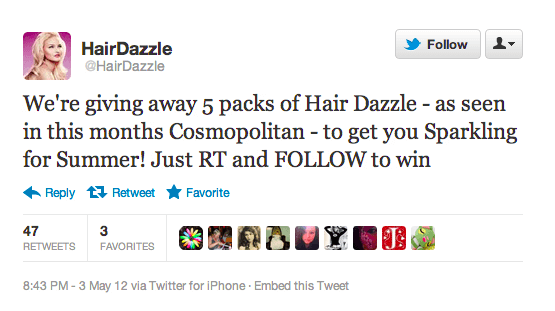
  • Retweet
  • Creative Answer with hashtag

Retweet contests are a win-win for brands and followers. With only a click of a button, brands are able to spread their messaging and calls-to-actions. Additionally, it is a ripple effect, as the follower’s followers will see the tweet and engage in the contest.

Retweet-to-Win-Photo

Photo: Retweet Contests

Special promotions

You can incentivize your community to spread the word to their family and friends via referrals in order to participate in events, contests or promotions (give $20, get $20). By doing this, you can engage your audience in a fun way while tracking customer behavior and measuring the virality of different types of events. When your consumers share their referral links, you can have them send pre-written copy that they can share across all social media channels.

Furthermore, everyone loves a sale, and promo codes are the marketer’s dream, because they allow for conversions and further behavioral insights. You can reward your loyal social media fans with a discount code and see your reach spread quickly. Create a different code for each social channel and see how many sales each campaign generates.

Partner with Influencers

According to a McKinsey Study, marketing-inspired word-of-mouth via “peers” generates more than twice the sales of paid advertising, with a 37% higher retention rate.

On Instagram and YouTube alone, there are over 150,000 social media influencers who have anywhere from thousands to millions of fans and are trusted for their opinions on anything from fashion, beauty, lifestyle, fitness, food and other product choices. You can harness the power of influencers to create high-quality content and spread the word about your brand, review your products and run giveaways.

Influencer content is also among the highest converting content there is today, because their content is naturally talking about what to buy. It’s not uncommon to see CPC ranges in the $1-2 or even less than $1, particularly when the influencer is a good fit with the brand. That’s why it’s important to find influencers that match your brand in terms of content, style and audience, as well as making sure that they actually like the product they’re promoting.

You might have heard of larger influencers like Josh Ostrovsky and Jen Selter working with big brands like Lululemon and Nike. They’ve been featured on major media channels and even started their own ventures.

But you don’t need to have a big budget to work with influencers. There are all kind of influencers across each vertical that don’t demand $15,000 per campaign. In fact, you can find influencers at all price ranges, including those who might post in exchange for commissions, cross-promotion or even just getting to try cool products from your store. As long as you have a brand that is exciting, you can find people to promote it.

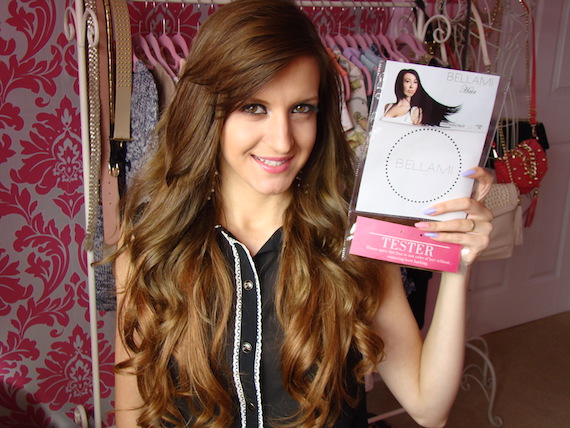
Numerous e-commerce brands have scaled their business with influencer marketing. In four years, Bellami Hair became a multi-million dollar business by producing videos with hundreds of popular YouTube beauty gurus. Not only has this been tremendous for their brand, but their average video sees an ROI of several hundred percent on sales. They’ve gotten so good at co-branding with influencers that they now do celebrity endorsements with Kylie Jenner.

Bellami-Hair-Extension-Review

Photo: Bellami Hair’s Influencer Marketing Strategy

L*Space by Monica Wise and Triangl Swimwear are two great examples of how fashion brands became Instagram sensations, powering their growth. L*Space became a phenomenon by gifting products to fashion bloggers and lifestyle Instagrammers and cross-promoting on over 100 Instagram posts that reach 20+ million people every month.

Here are three steps to building a sustainable influencer strategy:

  • Find the right influencers that match your brand
    • Does their content align with yours?
    • How is their engagement rate?
    • What is their subscriber growth?
  • Your creative should match your campaign goals and the best way to show off your products:
  • In-depth dedicated videos & product reviews are great for driving sales and signups
  • Instagram #OOTD posts and YouTube favorites/haul videos can reach a large audience quickly and effectively
  • Giveaways can generate tremendous engagement around your brand in the form of new followers, likes and comments
  • Analyze, Re-invest, Repeat
    • Not every video will be a colossal success. The key is generating a variety of content, tracking which posts/creators are successful, and re-investing behind them.

Monetize your Audience

Once your organic following has healthy growth, focus on monetization. Your followers are already engaged with your content. It is now easy to convert them into customers. 30-50% of your posts should be product related with strong purchasing calls-to-action. Use third party social media selling tools like Soldsie and Curalate in alignment with your content strategy.

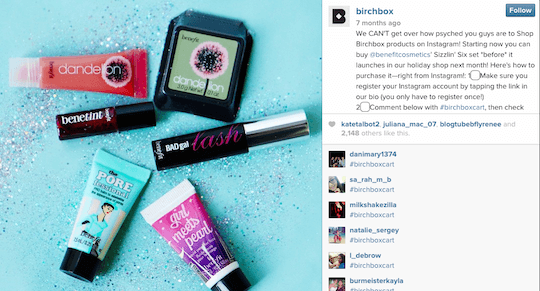
Soldsie allows your followers to purchase directly from Facebook and Instagram. Your followers just comment #Sold or with a branded hashtag and then are sent an email to checkout. This way they can shop from anywhere — as most of your consumers are already checking their social media feeds.

Birchbox-Instagram-Selling

Photo: Birchbox uses social selling with Soldsie

Another social selling tool is Curalate, which makes your entire Instagram feed clickable, and ultimately shoppable. All of your product photos can now link to your e-commerce website for checkout. Not only can you use this for product photos, but for blog content that you want to see higher readership. Just put the link in bio and then track sales and clickthrough rates from your Instagram photos.

Nordstrom-Curalate

Photo: Nordstrom uses Curalate to make their Instagram feed shoppable

You can now directly attribute product purchases from social media. This is important, because there is 75% web shopping cart abandonment, and now social media can be a driver in generating revenue right from the platform. By using social selling tools, you can easily target your customers where they are already spending their free time.

Social selling not only produces conversion rates, but also positions your brand as innovative within the social media landscape. You can find additional value adds from working with these tools including collecting emails that can be used for your database and increased follower reach — as your customers are putting in their email addresses when they register for these tools.

From all of this direct social sales, it is important to measure the average value of your followers on different social networks. Track sales on your social posts to understand how many followers are converting, which allows you to understand how much you can spend to acquire new followers. From there you can create allocate budget to growth marketing, influencer marketing, and direct advertising.

Gain SEO and Sales from YouTube Videos

YouTube has been a phenomenal channel for brands to invest marketing dollars into over the last few years. In addition to being able to work with thousands of YouTube influencers to promote your brand, it is also the world’s second largest search engine, which means you can drive considerable SEO by producing solid videos, or having influencers make them for you.

Elle-Bangs-1

Photo: Elle Bangs Hair Tutorial

It’s also easy to measure and track success thanks to the number of CTA options, from annotations directly in the video to tracking links in the description. YouTube also recently unveiled shoppable ads, which will allow you to sell products directly via YouTube videos created on your own channel or influencers’ channels.

Final Thoughts

As Instagram has become the new magazine, influencer marketing the new word of mouth, and YouTube the new television, social media strategies must reflect the ongoing changes to the digital landscape. Never before have marketers been able to pull out as many customer insights, testimonials, and follower data. Social media has changed how brands communicate with their audience, and now it is time to turn those conversations into conversions. By incorporating these tools and techniques, you can demonstrate a strong social media ROI to the important stakeholders.

About the Author: Kate Talbot is the Content Marketing Manager for Revfluence, one of the largest influencer platforms for e-commerce companies and consumer brands, with clients like Calvin Klein, Madewell, Walgreens and Rent the Runway.

Kate has over eight years of experience creating and executing content strategies for early-stage startups and global brands including Virgin America and Kiva. Connect with her on Twitter and LinkedIn.